What Is a Tarot Card of the Day?
A Tarot Card of the Day is a single card you draw — usually in the morning — to set an intention, get guidance, or simply check in with yourself. It's not a full reading. It's a moment of reflection.
The practice is simple: You ask a question (or just ask for guidance), shuffle the deck, and pull one card. That card becomes your theme for the day. It's a lens through which you view what happens.
Real Tarot Card of the Day practice is about three things:
- Intention — What do you want guidance on?
- Reflection — What does the card bring up for you?
- Action — What will you do differently today?
When you approach it this way, the card becomes a tool for self-awareness, not prediction.
The 22 Major Arcana Cards: Daily Meanings
The Major Arcana are the 22 most powerful cards in the tarot deck. Here's what each one means when it shows up as your card of the day.
0 — The Fool
New beginnings, innocence, spontaneity. Take a leap of faith. Trust the journey — even if you don't know where it's going.
I — The Magician
Manifestation, resourcefulness, power. You have everything you need. Stop waiting. Start creating.
II — The High Priestess
Intuition, sacred knowledge, the subconscious. Trust your inner voice today. It knows more than you think.
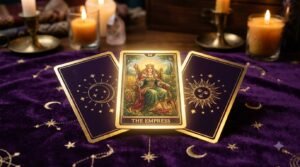
III — The Empress
Femininity, beauty, nature, nurturing. A day for self-care and creativity. Nourish yourself.
IV — The Emperor
Authority, structure, control. A day to take charge, set boundaries, and lead — starting with yourself.
V — The Hierophant
Spiritual wisdom, tradition, guidance. Seek advice from someone you trust. Or follow a proven path.
VI — The Lovers
Love, harmony, relationships, choices. A day for connection and important decisions. Align with your values.
VII — The Chariot
Control, willpower, success, determination. Push forward. Take the reins. You're in the driver's seat.
VIII — Strength
Courage, compassion, influence. A day for quiet power. You don't have to roar to be strong.
IX — The Hermit
Introspection, solitude, inner guidance. A day to go inward. Solitude isn't loneliness — it's wisdom.
X — Wheel of Fortune
Luck, karma, cycles, destiny. The wheel is turning. Trust it. What goes around comes around.
XI — Justice
Fairness, truth, cause and effect. A day for honesty and accountability. Do the right thing.
XII — The Hanged Man
Pause, surrender, new perspectives. Stop forcing. Look at your situation from a different angle.
XIII — Death
Endings, change, transformation. A cycle is ending. Let it. Something better is being built.
XIV — Temperance
Balance, moderation, patience. A day for harmony. Find the middle path.
XV — The Devil
Shadow self, attachment, restriction. Face what you've been avoiding. Freedom comes from naming it.
XVI — The Tower
Sudden change, upheaval, awakening. A shake-up is happening — for your highest good. Let it fall.
XVII — The Star
Hope, faith, purpose, renewal. A day for healing. Look up. The light is still there.
XVIII — The Moon
Illusion, fear, intuition, subconscious. A day for deep feelings. Don't make big decisions. Feel instead.
XIX — The Sun
Positivity, fun, warmth, success. A day for joy. Let yourself be happy. You've earned it.
XX — Judgement
Rebirth, inner calling, absolution. A day for reflection. Forgive yourself. Answer the call.
XXI — The World
Completion, integration, accomplishment. A cycle is complete. Celebrate. Then begin again.
Upright vs. Reversed: How to Read Both
When you draw a card, it can come out upright or reversed (upside down). This doesn't mean one is "good" and one is "bad." It means the energy is either flowing freely or blocked.
Upright Cards
Upright cards suggest the energy of the card is available to you. The Fool upright means new beginnings are here. The Sun upright means joy is accessible. Lean into it.
Reversed Cards
Reversed cards suggest the energy is blocked, delayed, or asking you to look inward. The Fool reversed might mean you're afraid to start. The Sun reversed might mean you're forcing happiness. It's not a punishment — it's information.
How to Interpret Either Way
Ask yourself: What does this card bring up for me? How does my body feel when I look at it? What's the first thought that comes to mind? Your reaction is the reading. The card is just the prompt.
Morning vs. Evening: When Should You Pull Your Card?
Both work. But they serve different purposes.
Morning Pull: Setting the Intention
A morning pull sets the theme for your day. It's proactive. You ask: What do I need to know today? Then you move through your day with that card in mind. You notice things you might have missed.
Evening Pull: Reflecting on the Day
An evening pull helps you process what happened. It's reflective. You ask: What did I learn today? Then you see how the card connects to your experience. It's a journaling prompt.
Which Should You Choose?
Try both. See which one feels more natural. Some people pull in the morning for guidance. Some pull at night for reflection. Some do both. There's no wrong way.
5 Mistakes Beginners Make (And How to Fix Them)
If you're new to tarot, avoid these common pitfalls.
❌ Mistake 1: Treating the card as a prediction.
✅ Fix: The card isn't telling you what will happen. It's showing you what's already happening — inside you. Use it as a mirror, not a crystal ball.
❌ Mistake 2: Drawing multiple cards when you don't like the first one.
✅ Fix: Draw once. Sit with it. Even if it's uncomfortable. The uncomfortable cards are usually the ones you need most.
❌ Mistake 3: Memorizing meanings instead of feeling them.
✅ Fix: The book meaning is a starting point. Your reaction is the real reading. What does the image make you feel? What memory does it bring up?
❌ Mistake 4: Ignoring reversed cards because they seem "negative."
✅ Fix: Reversed cards aren't bad. They're invitations to look deeper. A reversed card often points to exactly what needs your attention.
❌ Mistake 5: Thinking you need a "gift" to read tarot.
✅ Fix: You don't. Tarot is a tool for reflection. Anyone can use it. It's not about psychic ability. It's about paying attention.
The 7-Day Tarot Journaling Practice
Want to deepen your daily tarot practice? Try this 7-day challenge.
Day 1 — Notice
Pull a card. Write down your first reaction. Don't look up the meaning yet. Just notice what comes up.
Day 2 — Connect
Pull a card. Write down one memory or feeling it brings up. How does it relate to your current life?
Day 3 — Question
Pull a card. Write down a question you have about your life right now. Then ask: What would this card say about it?
Day 4 — Action
Pull a card. Write down one small action you can take today based on the card's energy.
Day 5 — Reflect
Pull a card. Look back at yesterday. Did your action change anything? How do you feel today?
Day 6 — Release
Pull a card. Write down one thing you're ready to let go of. Then let it go.
Day 7 — Integrate
Pull a card. Look back at your week. What patterns do you notice? What did the cards teach you?
Tarot vs. Oracle Cards: What's the Difference?
Both are divination tools. But they work differently.
Tarot Cards
Tarot has a fixed structure — 78 cards (22 Major Arcana + 56 Minor Arcana). The meanings are layered and complex. Tarot is a system you study and deepen over time.
Oracle Cards
Oracle cards are free-form. Each deck is different. The meanings are usually simpler and more direct. Oracle cards are great for quick, intuitive readings.
Which Should You Use?
Start with tarot if you want structure and depth. Start with oracle if you want simplicity and intuition. Or use both — many readers do.
What We've Learned About Tarot Card of the Day
After years of helping readers understand Tarot Card of the Day, we've noticed patterns that come up again and again. Not scientific data — just real conversations, real questions, and real feedback.
Here's what we keep hearing:
Most
readers say the daily card often matches what they were already feeling — but couldn't name
Many
have found that pulling a card in the morning helps them feel more grounded and intentional throughout the day
Often
the most common daily cards readers report are The Fool, The Star, and The Hermit
Consistently
the value of a daily tarot practice isn't prediction — it's the moment of reflection it creates
That last point comes up the most. Whether or not you believe in divination, the practice of pulling a card creates a pause. And in that pause, you check in with yourself. Research on mindfulness from the American Psychological Association shows that brief moments of reflection reduce anxiety and increase self-awareness. If tarot serves that purpose, it's valuable.
The Takeaway: Tarot Is a Mirror, Not a Crystal Ball
Tarot Card of the Day isn't about predicting the future. It's about seeing the present more clearly.
But here's what I know: the value isn't in the card. It's in the reflection. It's in what you do with the message. Do you pause? Do you avoid? Do you take action?
So use this guide. Use the daily draw. But don't let the cards decide for you. You're not a tarot card. You're a person. And your life is yours to shape.
If you're curious about other patterns, explore our life path number guide, try the love language calculator, or check your zodiac lucky color guide.
 Numerology
 Numerology
 Numerology
 Numerology
 Numerology